Sailor Jerry and the Golden Age of American Traditional Tattooing
 Kirlian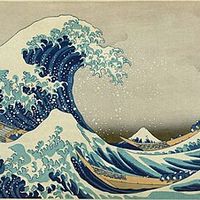
In the canon of American tattoo history, Norman Collins — universally known as Sailor Jerry — occupies a position something like what Robert Johnson occupies in the blues: an artist who synthesized the traditions available to him into something new, and whose influence radiated so far forward in time that the full extent of it is still being measured. Jerry didn't invent American tattooing, but he transformed it.
Who Was Sailor Jerry
Norman Keith Collins was born in 1911 in Reno, Nevada, and came of age riding freight trains across the American West, learning to tattoo from a carnival tattooist named "Big Mike" in the early 1920s. He eventually settled in Honolulu, Hawaii — then a territory, not yet a state — where he opened a shop on Hotel Street, the heart of the district that served the enormous American military population passing through Pearl Harbor.
Honolulu was a consequential location. It placed Jerry at the intersection of the American military tattoo tradition — where tattooing had been a sailor's rite of passage since the Pacific voyages of the 18th century — and the Japanese tattoo traditions that were geographically accessible from Hawaii in ways they weren't from the mainland. Jerry became one of the first Western tattooists to study Japanese tattooing seriously and systematically, corresponding with Japanese masters and incorporating their technical innovations into his work.
The Japanese Influence
What Jerry brought back from his study of Japanese technique was transformative for American tattooing. Japanese irezumi employed a sophisticated understanding of shading, color gradation, and the body as a three-dimensional canvas. Designs were conceived in relation to the body's form rather than as flat images applied to a surface. Color was used boldly and with clear symbolic intent.
Jerry incorporated these principles into American flash — the pre-drawn, ready-to-tattoo designs that were the primary working currency of American tattoo shops. His flash sheets featured the classic American imagery — eagles, anchors, ships, pin-up figures, snakes, roses — but executed with Japanese refinement: cleaner lines, more sophisticated shading, bolder use of color, and designs that worked with the body rather than against it.
The Flash Legacy
Jerry's original flash sheets are among the most collected items in tattoo history. He was fiercely protective of his designs during his lifetime — he was known to take legal action against tattooists who copied his work — and after his death in 1973, his estate maintained control over the image archive.
The influence, however, was impossible to contain. A generation of tattooists who passed through Honolulu or encountered Jerry's work carried it with them. Ed Hardy — perhaps the next most significant figure in American tattooing's development — studied under Jerry and went on to create the synthesis of Japanese and American traditions that would become his signature. Hardy's eventual licensing of his imagery to the fashion industry in the 2000s made "tattoo art" a global consumer category.
American Traditional Today
The style now called American Traditional — characterized by bold black outlines, a limited but saturated color palette, and iconography drawn from maritime, patriotic, and folk traditions — is experiencing a significant revival. Artists working in the style today cite Jerry's work explicitly, and competitions at major conventions routinely feature traditional categories that are among the most hotly contested.
The revival isn't merely nostalgic. Younger artists are finding in the traditional vocabulary a clarity and boldness that feels like a corrective to the more technically demanding but visually delicate styles that have dominated the past decade. There's something enduring in a well-executed eagle or a perfectly balanced rose, and the craft required to execute them correctly is more demanding than it looks.