The Ancient Origins of Tattooing: From Ötzi to Polynesia
 Kirlian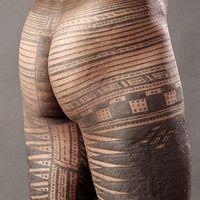
Tattooing predates recorded history. The evidence is written on skin — the preserved skin of mummies found across four continents, spanning more than five thousand years. What this evidence reveals is not a single origin point but a human impulse so universal that it emerged independently, over and over, in cultures that had no contact with one another.
Ötzi the Iceman: The Oldest Known Tattoos
In September 1991, hikers in the Alps on the Austrian-Italian border discovered a remarkably preserved human body emerging from a retreating glacier. The man they found — now known as Ötzi the Iceman — died approximately 5,300 years ago, and he carried with him the oldest confirmed tattoos ever discovered on a human body.
Ötzi had 61 tattoos distributed across his body: simple lines and crosses made by rubbing charcoal into small cuts in the skin. Significantly, most of his tattoos are located at points that correspond to acupuncture meridians and areas where he showed evidence of joint pain and disease — arthritis of the hip and knee, intestinal parasites. Researchers now believe his tattoos may have been therapeutic in intent, a form of medical treatment rather than decoration or status marking. Whether this interpretation is correct or not, Ötzi establishes definitively that tattooing is at least 5,300 years old in Europe.
Ancient Egypt
Egyptian mummies dating to approximately 2000 BCE show evidence of tattooing, particularly on female mummies. The patterns — dots and dashes applied to the abdomen, thighs, and breasts — have been interpreted as fertility symbols or protective markings related to pregnancy and childbirth. The goddess Bes, a protective deity associated with childbirth, appears to have been depicted in tattoo form on some mummies.
More recent discoveries have expanded the picture. A 2016 analysis of two mummies from Deir el-Medina revealed tattoos of representational imagery — a seated figure and a lotus blossom — suggesting that Egyptian tattoo practice was more complex and varied than previously understood.
Polynesia: The Word Itself
The English word "tattoo" comes directly from the Polynesian word "tatau" or "tatu," introduced to the European lexicon when Captain James Cook's expedition encountered tattooed Polynesian people in the 1760s and 1770s. But Polynesian tattooing was not something Cook discovered — it was already a sophisticated, ancient, and deeply meaningful tradition.
Across the Pacific — in Samoa, Tonga, Hawaii, the Marquesas Islands, Aotearoa New Zealand, and beyond — tattooing occupied a central place in social and spiritual life. Designs were not merely decorative; they were genealogical records, spiritual armor, and markers of social rank. The Māori tradition of tā moko — facial tattooing applied with chisels rather than needles, creating grooves in the skin — is among the most distinctive and technically demanding tattoo traditions in human history.
The Americas and Asia
Tattooed mummies have been found in Peru dating to approximately 1000 BCE. The Paracas and Chiribaya cultures practiced tattooing, as did the Inca. In Japan, clay figurines with facial markings suggesting tattoos date to the Jōmon period (10,000–300 BCE), and documentary evidence of Japanese tattoo practice appears in Chinese records from the third century CE. In Thailand and Cambodia, sak yant — sacred geometric and script tattoos traditionally applied by Buddhist monks and believed to confer spiritual protection — has a continuous history of at least a thousand years.
A Universal Human Practice
The geographic breadth of ancient tattooing — Europe, Africa, the Pacific, the Americas, Asia — points to a fundamental human disposition to mark the body with meaning. The specific meanings vary enormously: status, protection, beauty, medicine, mourning, spiritual connection, group belonging. But the impulse to make permanent marks on skin appears to be, in the fullest sense, human.